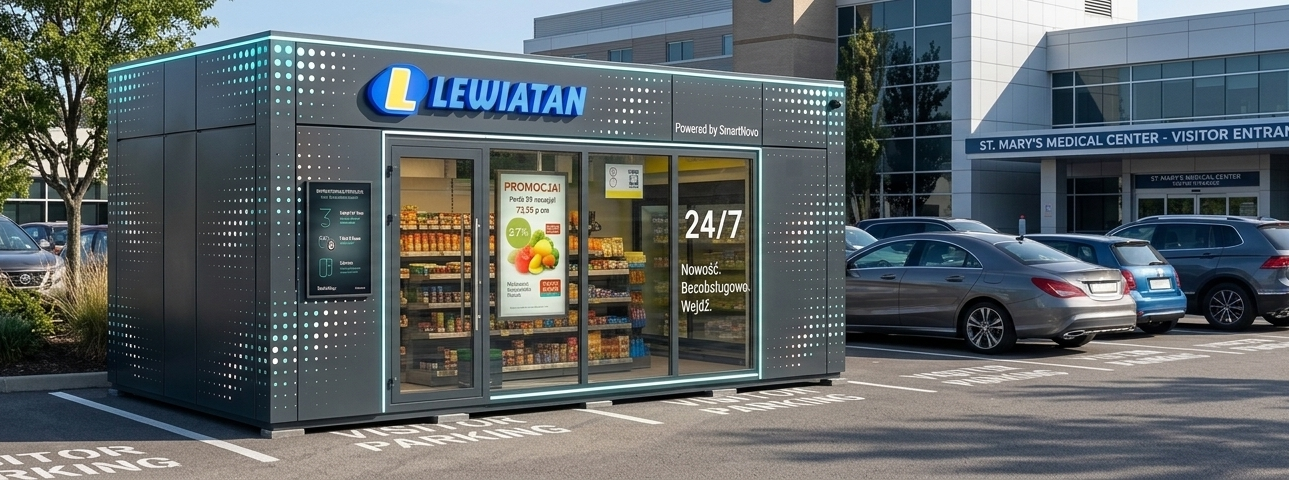
Office campuses


One AI is the manager, the cashier, the guard and the marketing team. Customers scan, shop and walk out. A 21 m² store, craned onto site and trading in under an hour, under any brand.
Thousands of forecourts, campuses, hospital sites and small towns have real demand. But a clerk on every shift sinks the numbers before the first basket is scanned, so SmartNovo removes the line items that break the model.
Staff are half to two-thirds of a convenience store's running cost. Poland's minimum wage nearly doubled in five years.
Most small-format stores shut by 9pm and on holidays, exactly when an always-on format captures the demand that walks away.
Shrinkage runs 1.5 to 2% of European retail sales, and small stores rarely have real-time loss prevention.
A conventional fit-out means a lease, a build-out and consent: months and six figures before you trade. And it is all sunk into the venue. If the location stops working, the owner walks away and the fit-out stays behind.
It is the store manager, the cashier, the security guard and the marketing team in a single system. It opens the doors, tracks every product in real time, flags theft, responds to falls and decides which promotions to run. When stock runs low, it places the order and dispatches a human assistant to restock exactly what it asks for.
Humans don't run this store. They work for it.
Customers unlock the door with the app, a bank card or their phone number. Secure, sensor-controlled contactless doors.
The system registers an unpaid item in real time, notifies the customer and alerts the operator in parallel.
Recognises a person down and pushes a medical alert, so there is safety cover with no staff.
The AI tracks every product in real time and places the order before shelves run empty.
Self-checkout POS with card & BLIK. The unit reconciles itself.
The AI decides which offers to run and when, and pushes them to the in-store screens.
138-point skeletal tracking and behaviour recognition, built in-house over four years and running on commodity cameras at the edge.
The moment the system registers an unpaid item, the customer gets an instant notification: the item, the price, and a tap to pay. Security is alerted in parallel. Neutral by design, with no accusation, just the record and a one-tap fix. If it is wrong, one tap disputes it and a person takes over.
The same skeletal model recognises a collapse and pushes an immediate medical alert. That is safety cover in an unmanned store, without a single camera ever identifying a face.
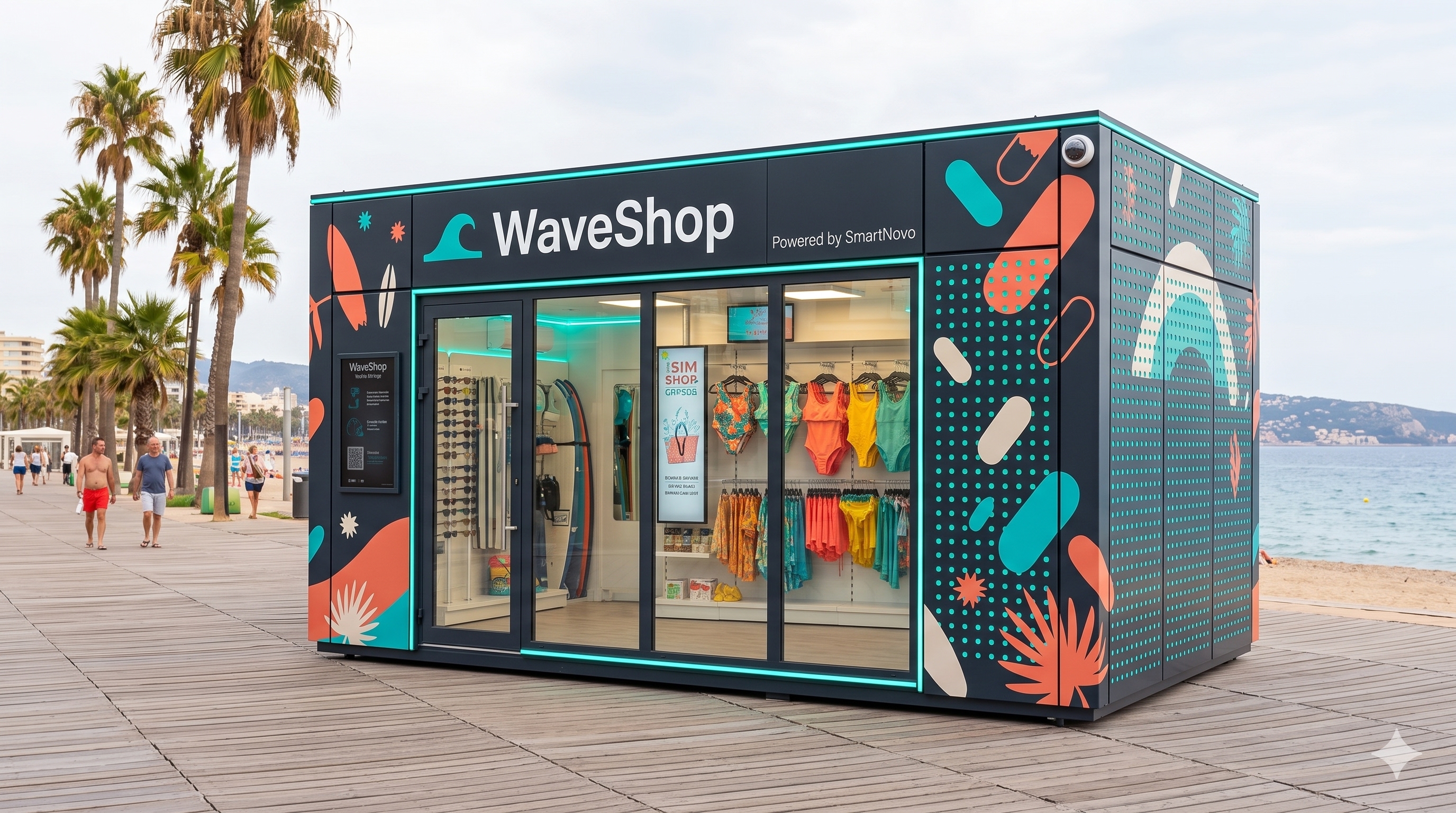
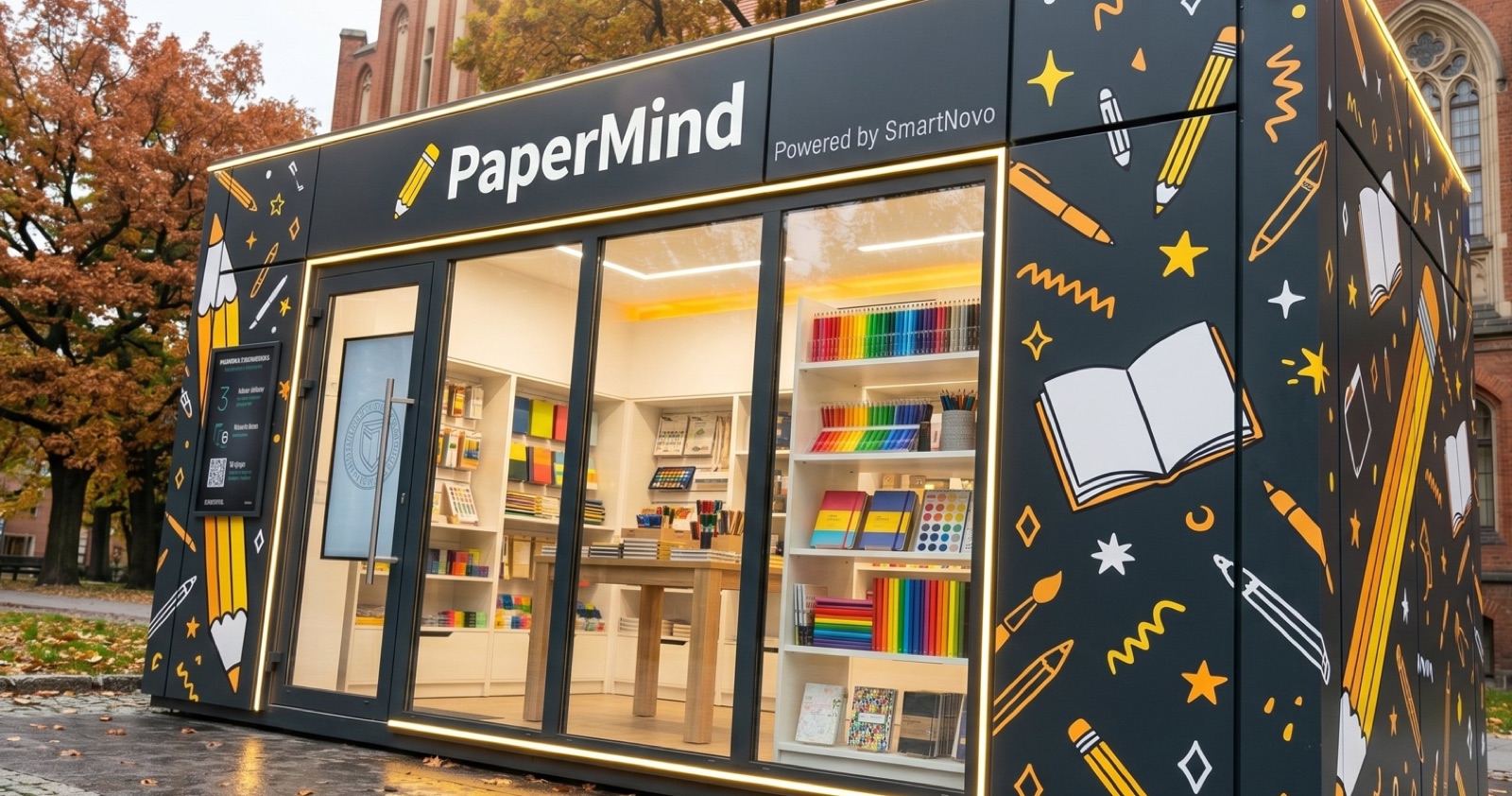
Convenience, pharmacy, campus, forecourt or resort. The unit is the same, and the brand is yours.
Assortment configured per site and applicable law.




 NVIDIA
The things operators and brands ask us first.
Tell us the site and the brand. We'll show you a unit trading in weeks, not quarters.